POLITICS
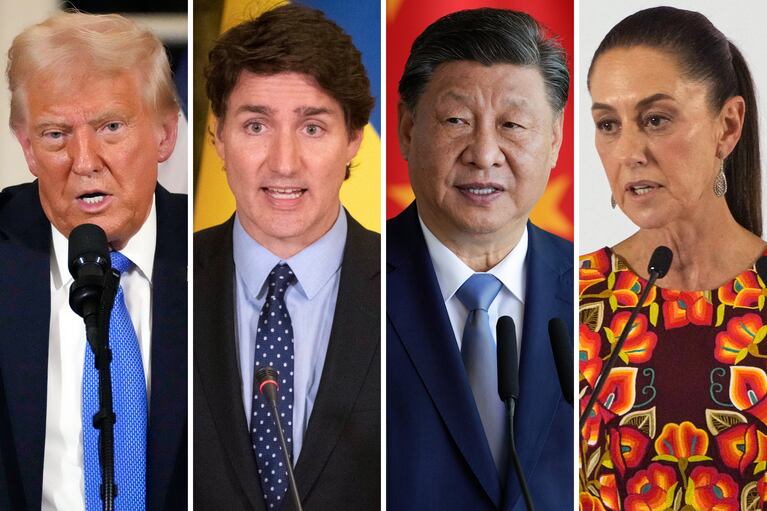
Trump’s Tariffs on Canada, Mexico and China
Written by: Jimmy Zheng
Researched by: Jimmy Zheng
Edited by: Jessica Kwok

WASHINGTON — One of Trump’s earliest decisions in office has been imposing 25% tariffs on nearly all goods imported from Canada and Mexico. Despite varying opinions on whether this is beneficial for the U.S. economy or not, these tariffs have unquestionably sent shockwaves throughout the U.S. stock market. These tariffs went into effect on March 4 and have already led to a sharp decline in economic activity, as seen with the S&P 500 falling 1.8%. Nasdaq, primarily composed of big tech companies, fell 2.6%, while the Dow Jones Industrial Average fell 1.5%. Although Trump vowed to lower inflation, economists are uncertain about the consequences of the tariffs which could potentially increase the rate of inflation. This would lower consumer purchasing power as prices of everyday goods from groceries to electronics may increase. Fears continue to grow as the Federal Reserve Bank of Atlanta predicts a 2.8% contraction in the first quarter which may lead to a potential recession.
Not only did Trump impose tariffs on Canada and Mexico, but he also imposed a 10% tariff on imports from China, which went into effect on Feb. 4. These tariffs immediately started a trade war as Canada and China have each responded by imposing retaliatory tariffs on the U.S. While Mexico has held off on retaliatory tariffs, Mexican President Claudia Sheinbaum severely criticized Trump’s tariffs.
This isn’t the first time Trump has imposed tariffs on China. During his first term as President, Trump started a tariff war with China, in which he failed to bring back manufacturing jobs. Instead, this economic battle caused price increases and strained business operations. However, as of March 6, Trump has signed an executive order to temporarily pause tariffs on Canadian and Mexican imports. This was done in compliance with the United States-Mexico-Canada Agreement, an agreement meant to create a more balanced trade agreement between the three countries. As the economic situation continues to unfold, it remains to be seen if the long-term impacts of Trump’s tariffs reflect positively for the U.S. economy.
FEATURES
North Korea Opens up Borders for Western Tourists for the First Time in Five Years
Written by: Madison Hernandez
Researched by: Madison Hernandez
Edited by: Kate Sum

NORTH KOREA — For the first time in five years, North Korea has opened its borders up for tourists. North Korea closed its borders in response to the COVID-19 pandemic in January 2020 and has continued to isolate itself from the rest of the world since, primarily depending on support from Russia and China. However, this decision has impacted North Korea’s economy, with a projected loss of $175 million (USD) in one year alone. In January 2024, North Korea allowed a small group of Russian tourists to visit North Korea’s capital, Pyongyang, marking the first known foreign visit to the country since 2020. In February 2025, North Korea allowed two Western tour companies to resume four-night trips to Rason, a small city in North Korea, between Feb. 12 and Feb. 18 which coincided with the celebration of the country’s late leader, Kim Jong Il.
Among the first groups to visit were tourists from the United Kingdom, France, Germany and Australia. Tourists followed a strict schedule with approved excursions and were escorted by local guides. Excursions included trips to a beer factory, a school, a pharmacy and more. According to one tourist, the trip to the school was one of the most notable moments of their excursion. Mike O’Kennedy, a YouTuber, observed eight-year-olds dancing to a video of ballistic missiles hitting targets and explosions. Additionally, Joe Smith — a North Korean traveler and former writer for the North Korean platform named NK News — highlighted a visit to a luxury goods market that sold jeans, perfumes, fake luxury handbags and washing machines. This spontaneous visit allowed tourists to interact directly with citizens the most, as a result of censorship of citizens in most other excursions.
However, the state of life in Rason was shocking, even for the most seasoned North Korean travelers. Tourists commented that the roads were poorly paved and that many buildings lacked proper lighting and heating. Furthermore, North Korea’s maintenance of strict free speech laws has caused some tourists to feel uncomfortable. O’Kennedy states that he was told that writing “I wish the world peace” in a visitors book was an inappropriate statement. These instances have led to growing questions regarding the well-being of North Koreans and the repercussions they would face if they engaged in conversations about contentious topics such as international politics. Despite the fact that tourists were not allowed to take pictures at most sites, Smith stated that this sentiment further amplified the raw nature of everyday life. Tourism allows North Koreans to engage with foreigners, allowing them autonomy and insight into the world outside of their carefully controlled bubble.
ENTERTAINMENT
The Life and Legacy of Khalil Fong
Written by: Lauren Jim
Researched by: Lauren Jim
Edited by: Jonathan Zhang
Trigger Warnings: mentions of death

https://images.app.goo.gl/Nk7a4RDCsYmSEGmSA
HONG KONG — On Saturday, March 1, the death of Hong Kong singer-songwriter Khalil Fong was announced through his record label, FU MUSIC. The singer had been battling an illness for over five years before passing away on the morning of Feb. 21, where his label wrote that he was “stepping into the next realm of existence to carry forward his purpose and dreams.” He was 41 years old at the time of his death.
Born in Kauai, Hawaii, Fong was renowned for blending soul and R&B with Chinese pop, where he rose to stardom in 2005 with the release of his first album, Soulboy. At the time, Chinese songwriters primarily produced traditional ballads, and only a limited number of people listened to Chinese R&B. However, his passion for infusing Western music elements throughout his albums earned him a dedicated fanbase, especially in mainland China, Hong Kong and Taiwan. He has obtained numerous titles and awards throughout Asia — including two Golden Melody Awards by the Taiwan Ministry of Culture — for his outstanding achievements within the Chinese music industry.
In 2016, after releasing his ninth album, JTW, Fong gradually faded from the public eye. It wasn’t until the release of his 10th album, The Dreamer, in Oct. 2024 where he stated that he had been recovering from health issues over the years, and his newest album was a collection of songs produced during various stages of his illness. Although he posted on social media that his condition had improved significantly since the production of his latest album, there have been no further updates regarding the status of his health up until his recent passing.
Following the news of Fong’s death, fans from all over the world paid tribute to the singer-songwriter, including celebrities like JJ Lin, who posted a photo of the two together while reminiscing about Fong’s gentle personality, and “the energy, works and light [he has] brought to this world.”
Fong pioneered the evolution of Chinese pop, where his lyrical storytelling and harmonious melodies have touched the hearts of listeners far and wide. His impact on the Chinese music scene lives on through his expansive discography, which serve as a reflection of his warm, tender spirit and his vision for redefining the art of music.
POLI CO CORNER
Women’s History Month Spotlight – Grace Lee Boggs
Written and Researched by: Grace Lim
Edited by: Selina Chen

March is Women’s History Month, where we celebrate and reflect on the women who have shaped history. Asian women have made lasting contributions to various spheres, and one of those women is Grace Lee Boggs. Boggs (1915–2015) was a Chinese American activist who left a deep social justice and civil rights legacy. Born in Providence, Rhode Island to Chinese immigrant parents, Boggs earned a Ph.D. in philosophy from Bryn Mawr College in 1940. Due to her race, she faced anti-Asian and gender discrimination, and she was only able to secure a low-paying job at the University of Chicago library. Here, she saw the protests of poverty and poor living conditions of the Black people living in the community. This experience began her lifelong commitment to social change, beginning with housing-related activism and poverty. She then moved to Detroit to edit the radical newsletter Correspondence,to which she met her partner in life and activism, James Boggs, a Black man. Together, they joined labor and civil rights movements and were early members of Detroit’s Black Power movement. Boggs focused on community-led solutions to poverty, political disempowerment, and urban decline. In 1992, she co-founded Detroit Summer, a youth-led, multiracial, and inter-generational collective that uses media arts and service to empower young people in Detroit. Boggs’s approach to activism suggested that real change came from relationships, not quick fixes or top-down change. Her work encouraged grassroots movements and empowerment from local communities. As one of the first people to build Black-Asian solidarity, Bogg’s leadership helped expand the role of women in political activism and challenged Asian Americans to view their role in social justice as a whole. Grace Lee Boggs died in 2015 at age 100 after a lifetime of work toward a more equitable society.
 Asian Outlook | Art and Literary Magazine