
POLITICS
Japan’s First Female Prime Minister
Written by: Lydia Luo
Researched by: Andy Huang
Edited by: Ellie Kim, Rui Zheng
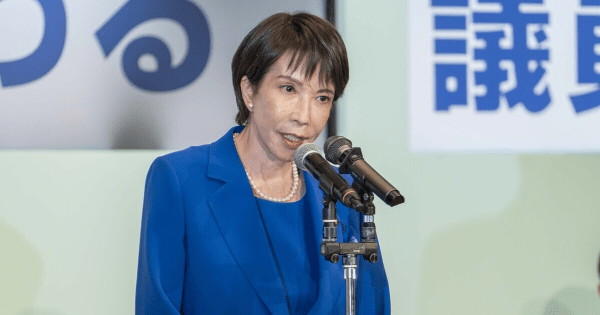
JAPAN — On Oct. 21, Sanae Takaichi was elected the first woman to be elected as Japan’s prime minister. Born and raised in Nara, Japan, Takaichi is an interesting character with a love for motorcycles and metal music; her current role and hobbies defy typical Japanese women’s stereotypes. She entered politics in 1993 and joined the Liberal Democratic Party in 1996, and has been working in many different positions of power, such as the Minister of State for Okinawa and Northern Territories Affairs, the Minister for Internal Affairs and Communications, the Minister for Economic Security, and became the first woman to chair the LDP’s Policy Research Council.
As a protegee of assassinated former Prime Minister Shinzo Abe, her goals as prime minister mirror his conservative legacy. Specifically, she wants to focus on economic growth, decreasing the expensive price on goods, and to “spend big and cut taxes.” She also wants to develop Japan’s international relationship with the United States of America. Her beliefs also include being against same-sex marriage and mass immigration, which faced a lot of backlash.
As a whole, Japan is very male-centered, so it is revolutionary that Takaichi is the first woman to serve as prime minister. However, how will her values and future policies contrast with her image of being the first female prime minister? She defies the stereotypes for Japanese women by being a woman in a position of power, proclaiming conservative views to the Japanese general public, and is considered too “masculine,” yet she has not done much for the female population in Japan. However, she doesn’t seem to prioritize women’s equality or gender issues compared to other issues. Takaichi will be meeting up with Donald Trump soon and later head off to South Korea for the Asia-Pacific Economic Cooperation (APEC) summit. We will see her ideas come into fruition as she works through her term, and see where she will take Japan in the future.
Gaza and Israel Ceasefire: Hostage and Prisoner Release Contrast
Written by: Shirley Zhang
Researched by: Jacky Jiang
Edited by: Annie Ngo and Kate Sum
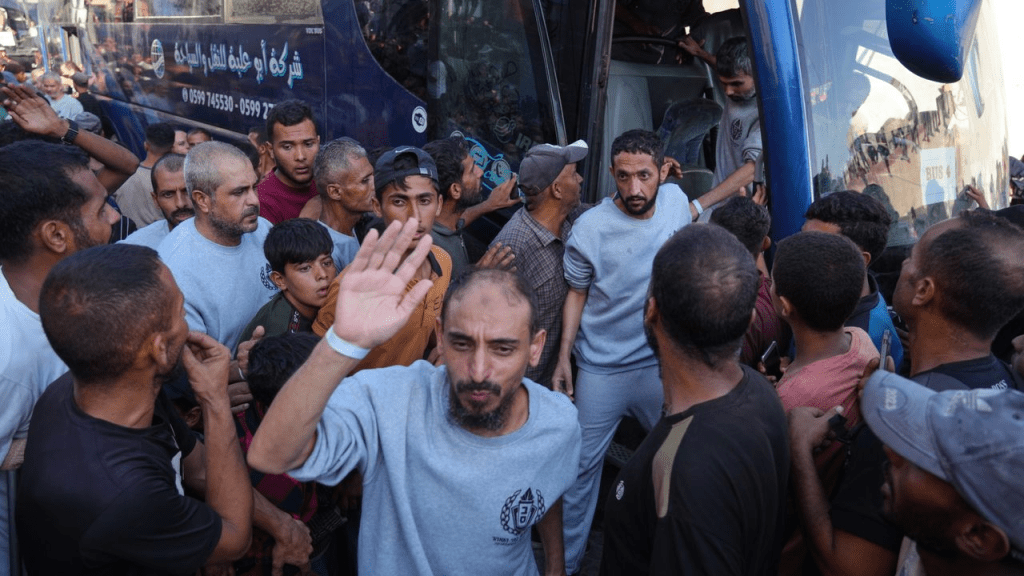
SHARM EL-SHEIKH, Egypt — On Oct. 13, world leaders convened in Egypt to formally sign a ceasefire agreement for the Gaza conflict. This temporary ceasefire has led to the release of hostages and prisoners, signaling the first major pause in the two-year-long war that has taken over the broader Middle East. However, reports from both sides have raised concerns over alleged mistreatment of captives and prisoners, emphasizing the human toll of the war.
As part of the agreement, Israel released nearly 2,000 Palestinian prisoners. Of these, 88 were returned to the West Bank, 1,726 to Gaza and 154 were deported to Egypt. Several of the released prisoners described facing torture and poor treatment during detention. Human rights groups have called for investigations into these claims, emphasizing that the treatment of detainees on both sides must comply with international humanitarian law.
According to Reuters, all remaining living Israeli hostages have been released from Gaza by the Red Cross as part of the ceasefire agreement. Some Israeli authorities reported that some of the 20 surviving hostages showed signs of mistreatment and torture. Former hostages also spoke publicly about witnessing severe physical and psychological abuse while in captivity — including being confined for long periods without adequate food or medical care.
The United States has joined Israel in the ongoing effort to locate missing bodies and recover the remains of those still unaccounted for. Representative Mike Waltz confirmed that American officials are working to identify any U.S. citizens who may remain missing following the war.
The ceasefire has brought a short-term halt to fighting, allowing humanitarian aid like food, medical supplies and fuel to enter Gaza. Nonetheless, the extensive destruction, food shortages and limited medical supplies still pose a critical challenge for civilians to return to normal living conditions. International leaders have urged both Israel and the militant Palestinian group that governs the Gaza Strip (Hamas) to adhere to the terms of the ceasefire and to engage in a sustained peace agreement. However, analysts warned that deep divisions and mutual mistrust between both groups may complicate efforts to ensure lasting peace.
Demonstrations Big and Small Say “No Kings”
Written by: Madison Lee
Researched by: Madison Lee
Edited by: Jonathan Zhang
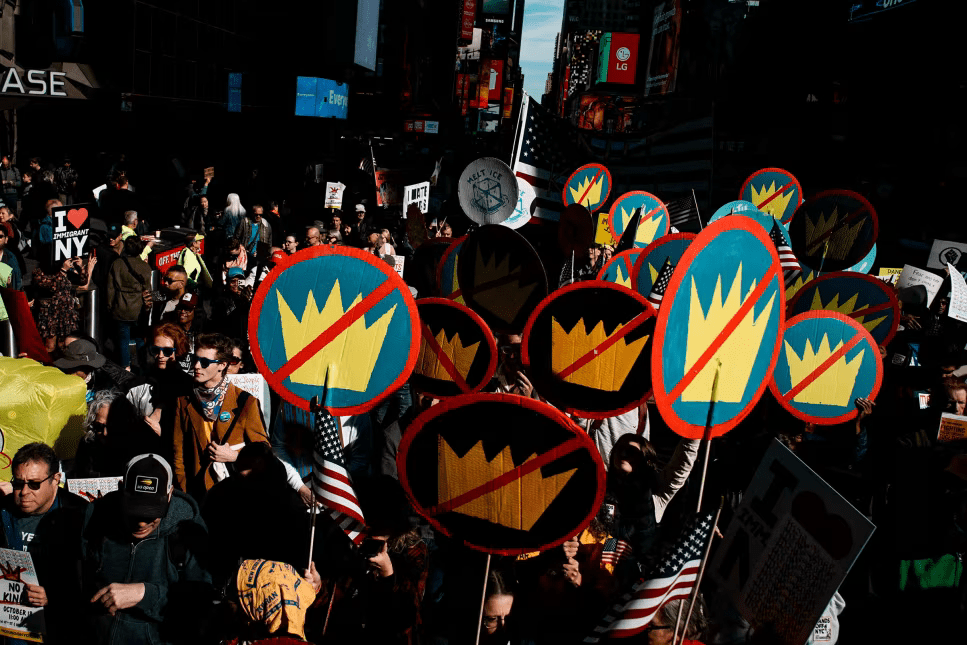
On Oct. 18, the second mass wave of the “No Kings” movement occurred with around 2,600 protests organized nationwide across every state in the U.S. The No Kings movement seeks to oppose Donald Trump and his administration’s actions to target and detain undocumented immigrants through the deployment of Immigration and Customs Enforcement (ICE) agents and federal troops, as well as its movements to cut down healthcare, environmental protections and education. Through the peaceful mobilization of millions of people, organizers hope to fight for democracy and protect constitutional rights, organizing their first event on June 14, the day of President Trump’s birthday and military parade. Just recently, protesters wore yellow to display their unity, holding up signs with slogans such as “No Kings, No Tyrants” and “Democracy not Monarchy.”
The mass demonstration spread across the whole country rallying a new wave of protestors from the initial event, sparked by outrage over immigration raids and voting rights infringements. Major metropolitan cities and small towns alike came together, organized by national and local groups to reach a total number of participants of over 7 million. New York City boasted numbers of over 100,000 demonstrators chanting “No More Trump!” along the streets of Times Square.
Republican decision makers like House Speaker Mike Johnson called the event a “hate America rally,” describing protests as anti-American. Some even attributed the recent government shutdown and the freeze in federal funding that are both still ongoing to the rallies, which had caused major flight delays and the freeze of Supplemental Nutrition Assistance Program (SNAP) benefits.
Just over an hour from Binghamton, local rallies and marches were organized in both Ithaca and Syracuse. In a Syracuse suburb, Dewitt, an approximate attendance of 6,000 demonstrators participated in a march stretching half a mile along Erie Boulevard. Thousands of attendees gathered in Washington Park in Ithaca, with demographics ranging from state representatives to university professors, to listen and speak out against the Trump administration. Attendees were encouraged to use their voice to support their community and learn about more community-led initiatives with local organizations and activist groups. Speakers also further advocated for immigrant protections, encouraging community support of bills such as the New York for All Act and the Dignity Not Detention Act that prohibit the operation of immigration detention facilities and promote the right to universal representation.
ENTERTAINMENT
Asian Representation at the Victoria’s Secret Fashion Show
Written by: Kimberly Cheong
Researched by: Mandy Guan, Lauren Jim, Lia Tsin
Edited by: Lauren Jim
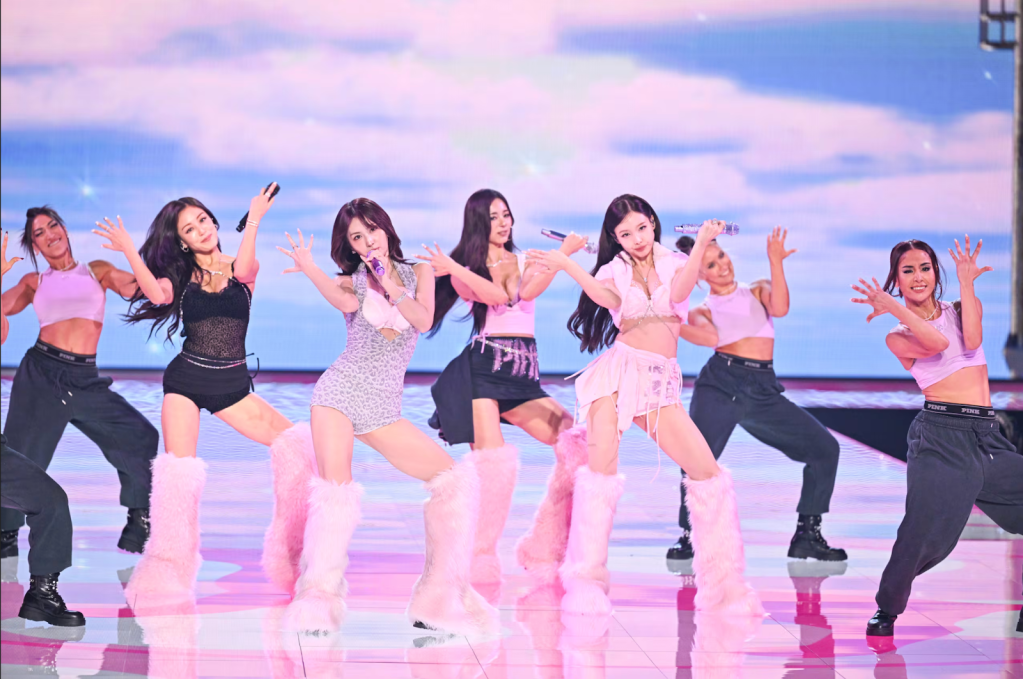
NEW YORK — On Oct. 15, models and artists from around the world gathered to perform at this year’s Victoria’s Secret Fashion Show. Featuring a diverse group of performers, the show featured Korean girl group TWICE, who became the second K-pop artist to perform at Victoria’s Secret Fashion Show, following BLACKPINK’s Lisa’s performance last year. Four of the nine members — Nayeon, Momo, Tzuyu and Jihyo — took the stage in joining an all-female performance lineup including Missy Elliott, Madison Beer and Karol G. Performing two of their popular tracks, “This is For” and “Strategy,” this marked a special moment for the group as they had recently celebrated their 10th anniversary. Victoria’s Secret’s decision to feature TWICE was well aligned with the purpose of their modern relaunch as they had aimed to celebrate women’s strength and creativity by mixing high fashion, pop culture and inclusivity. The four members coordinated their outfits by wearing baby pink knee-high fur boots and micro miniskirts to reflect the youthful style of the brand.
Joining TWICE onstage was Olympic gold medal-winning gymnast Sunisa “Suni” Lee, who made her runway debut as a PINK model. Her 2025 debut marked the first time a Hmong-American has walked the runway, and with WNBA star Angel Reese, the first athlete to walk the runway. When asked about her thoughts on Victoria’s Secret focusing more on individuality, inclusion and diversity, she said, “Growing up, I didn’t see many girls who looked like me in spaces like this. To now be here as an athlete, as someone who’s worked so hard to achieve her dreams, it feels powerful.” She hopes that young girls who come from similar communities “can see that they can own every version of themselves, strong, soft, bold, or glamorous.”
Sharing similar values with Lee, British-Punjabi model Neelam Gill stated, “I really believe in the new ethos of Victoria’s Secret, and it’s something I’m proud to represent. There are so many different body types on the runway this time, including a trans model, which is exactly how it should be.” As the first and only Punjabi-Indian in the Victoria’s Secret lineup, Gill’s appearance marked her second year on the VS runway. When asked about what kind of responsibility/emotion she brings to the runway, she highlighted how representation was important to empower young girls to be proud of themselves and how important it was to feel seen through these models who may come from the same background as us.
Also making her debut as the first Asian plus-size model on the runway is Japanese-American Yumi Nu. As a U.S. size 14 walking one of the most-watched runways in the world, that would have been unimaginable a decade ago as past Victoria’s Secret shows only had a narrow vision of what womanhood should look like. Nu discussed her thoughts on this shift, recalling how, “When I was little a Victoria’s Secret Angel was a symbol of glamour … But now, we want to see people’s personalities and who they are beyond the glamour … That is what is special about modelling today.” Nu’s presence is a powerful marker of progress as her presence on this stage represents a shift towards more diversity and inclusivity.
Other models who attended the show include Anne Curtis, Yang Mi, Davika Hoorne, Molly Chiang, Yoon Young Bae, Xiao Wen Ju and Sherry Shi. The 2025 Victoria’s Secret Fashion Show lineup represented the diverse change that the fashion industry is continuing to make. From having their first plus-sized model to featuring many more Asian artists, this year’s Victoria’s Secret fashion show turns the spotlight towards the Asian women taking the stage on the runway and from the front row seats.
Conspiracies Following Celebrity Yu Menglong
Written by: Carmen Tan
Researched by: Carmen Tan
Edited by: Kate Sum
Content Warning: Mentions of Death

BEIJING — On Sept. 11, actor and singer Yu Menglong was found outside of an apartment building after having tragically fallen from the fifth floor. His death was ruled accidental by authorities but has sparked debates and conspiracies among the public. Although not an A-list celebrity just yet, Yu Menglong had been gaining popularity amongst the public with his hit roles in C-Dramas such as “Eternal Love” and “The Legend of the White Snake.” It was clear Yu had a promising future ahead of him, winning awards at just the start of his acting career including “Newcomer of the Year” in 2018 and “Breakthrough Actor of the Year” in 2019.
Within the following weeks, online forums began speculating on the mysterious death that seemed out of character and lacked information from authorities. As speculations surfaced, the government’s role in censoring media through suspending accounts and wiping out internet posts only increased the mystery behind Yu’s death. With only succinct explanations by authorities, posts on social media continue to float around, creating twisted speculations behind the tragedy including theories around his agent, Du Qiang, and even Yu being a sacrifice for Xi Jinping, a theory based on a feng shui expert that lacks conclusive evidence backing it.
It is uncertain whether or not more concrete evidence will arise surrounding Yu’s death. Despite the explanations from authorities, the public seems set on proving that there is something more to the death than meets the eye. With media censorship, potentially biased sources and lack of available evidence, it is difficult for netizens to agree with authorities yet easy to spin this accidental death into something more sinister.
POLI CO CORNER
Election Day Is Upon Us: Key Races and Voting Information
Key Races
- New York City – Mayor
- Zohran Mamdani (Democrat)
- Curtis Sliwa (Republican)
- Andrew Cuomo (Independent)
→ For more information about the candidates, please visit our recent magazine issue “Eternal” for an overview of the NYC mayoral race on our website: asianoutlook.org
- City of Binghamton – Mayor
- Miles Burnett (Democrat)
- Jared Kraham (Republican, Incumbent)
How to Vote
- Find your polling sites and check registration → NY State Voter Portal
- Early Voting Locations (Oct. 25 to Nov. 2)
If registered to vote in Broome County or with an on-campus address, you can vote at any Broome County Polling Location.
- Broome County Public Library – 185 Court St., City of Binghamton
- Accessible from campus via BC Transit #5, #15, or #57 bus: transfer to the #12 bus at Binghamton Transportation Center.
- Vestal Public Library – 320 Vestal Pkwy E., Town of Vestal
- Accessible from campus via BC Transit #47 bus.
- Early Mail Ballot / Absentee Mail Ballot
- Request ballot deadline: Passed (Oct. 25)
- Return by mail: Postmark by Nov. 4 and the ballot must be received by Nov. 12
- Election Day Voting (Tuesday, Nov 4., from 6 a.m. – 9 p.m.)
- On Campus → University Union
- Off Campus → Your Polling Location
Stay Informed
- Binghamton University Center for Civic Engagement
 Asian Outlook | Art and Literary Magazine