POLITICS
Chinese Immigrant Found Dead in ICE Custody; Family Demands Answers
Written by: Brady-Charles Overtoom
Researched by: Brady-Charles Overtoom, Ianna Choi
Edited by: Jonathan Zhang
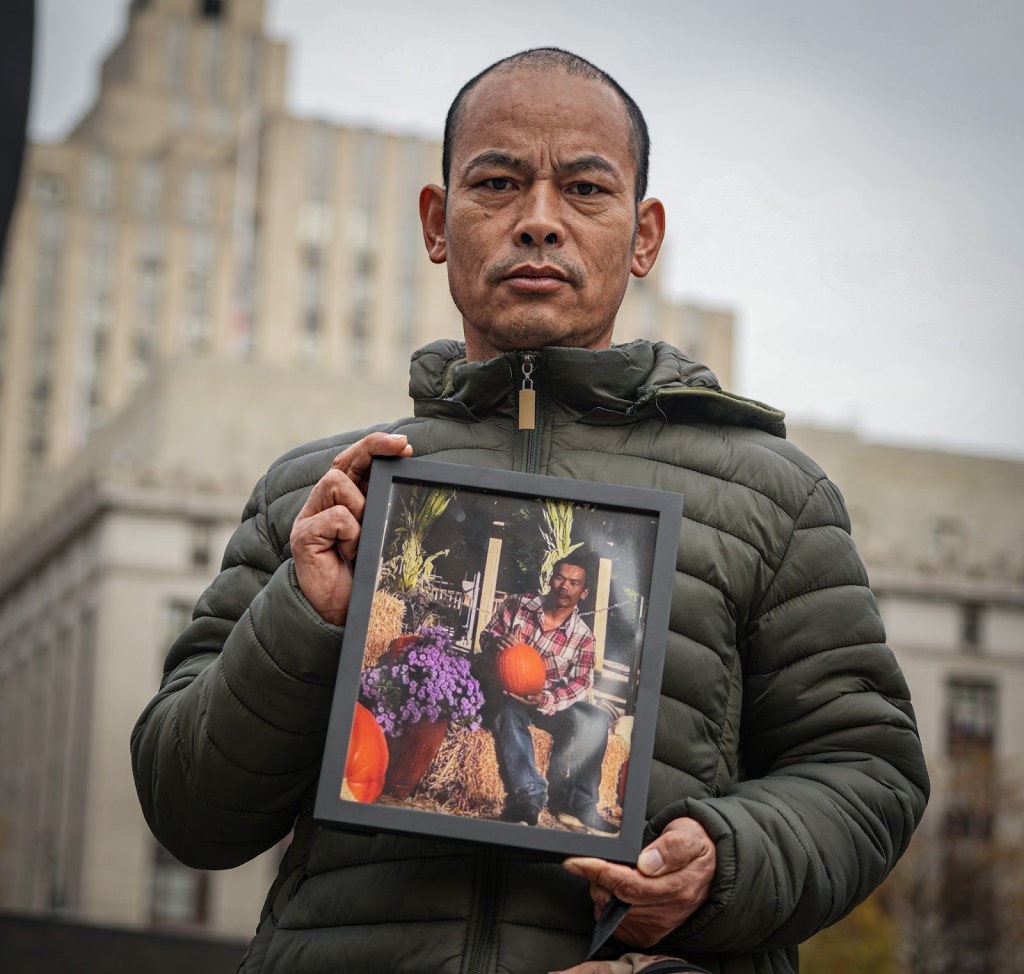
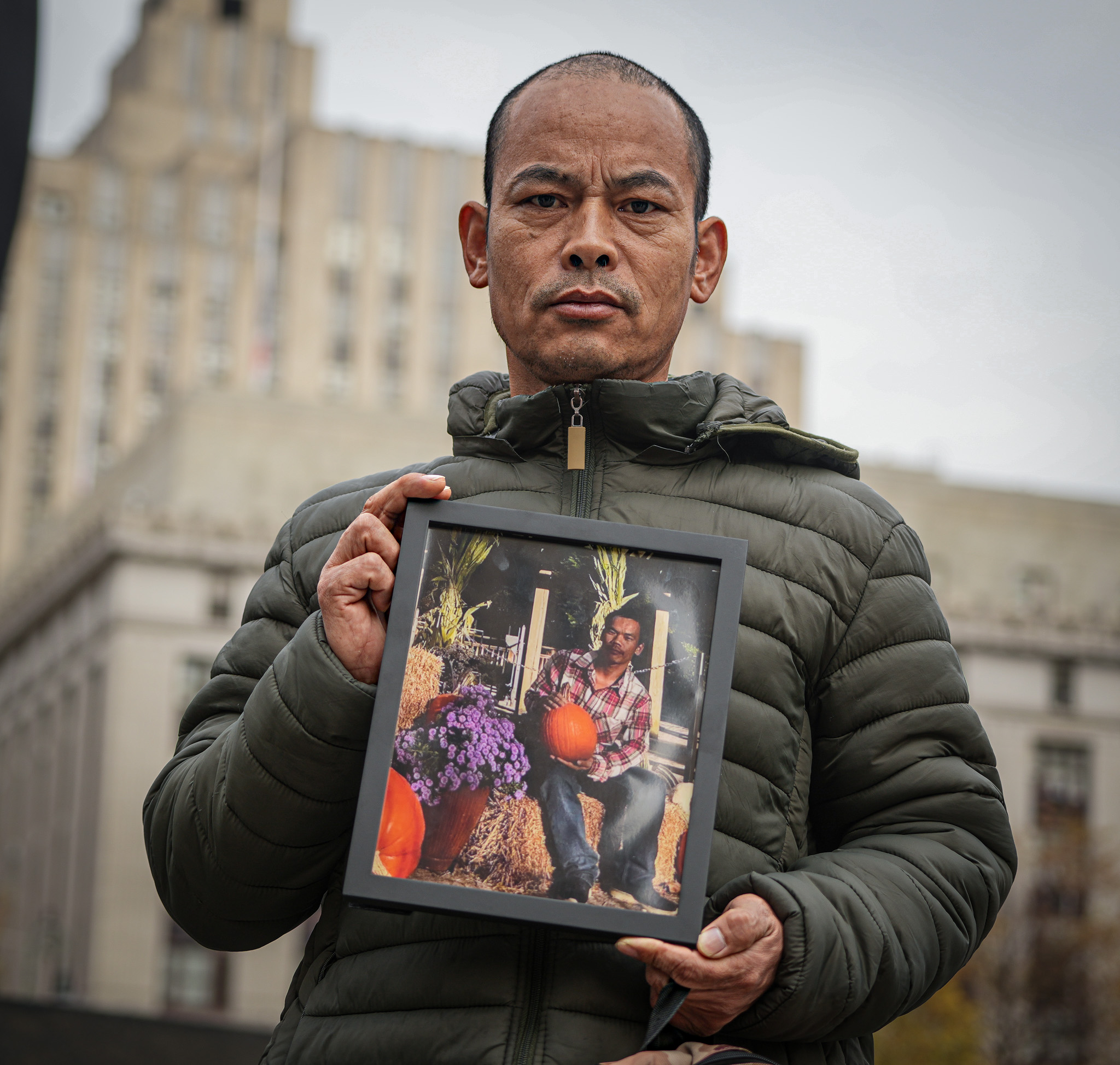
Chaofeng Ge’s brother, Yanfeng Ge, holding a photo of his brother who died in ICE detention.
Photo by Dean Moses
Trigger Warning: Mentions of Death, Suicide
PHILIPSBURG, Pa. — Chaofeng Ge, 32, a Chinese immigrant from Flushing, Queens, was found dead in an Immigration and Customs Enforcement (ICE) detention facility on Aug. 5, 2025. Three months later, his family is still fighting for answers about the circumstances surrounding his death.
Staff at the Moshannon Valley Processing Center (MVPC), located in Philipsburg, PA, discovered Ge hanging by his neck in a shower stall at approximately 5:21 a.m. Despite immediate CPR and assistance from emergency medical services, Ge was pronounced dead at 6:03 a.m. by the Clearfield County coroner.
According to ICE, Ge had been in custody for five days and was awaiting a hearing from the Department of Justice’s Executive Office for Immigration Review, the entity who oversees immigration courts. However, Ge’s family and legal representatives claim he had been detained for several months when his body was discovered, with his hands and legs tied behind his back — a detail that has raised questions about the official narrative.
Ge was arrested on Jan. 23, 2025, by Lower Paxton Township police after allegedly using a fraudulent credit card to purchase gift cards at a CVS. A day later on Jan. 24, after ICE Enforcement & Removal Operations (ERO) officials encountered him in Dauphin County Prison (DCP) located in Harrisburg, PA, they lodged an immigration detainer with the prison, essentially transferring Ge to federal custody in the event of his release from DCP.
Unable to post $150,000 bail, Ge remained in DCP. On July 31, 2025, although he was released from DCP, the federal immigration detainer was enforced and ERO arrested Ge and transferred him to MVPC as an ICE detainee. He would die five days later.
Additionally on July 31, Ge pleaded guilty to accessing a device issued to another person without authorization and conspiracy to commit the same offense. He was sentenced to six to twelve months with credit for time served.
Yangfeng Ge, Chaofeng’s brother, filed a Freedom of Information Act (FOIA) request on Sept. 9, 2025, seeking records about his brother’s detention, treatment, and the circumstances leading to his death. When ICE failed to respond, Yangfeng filed a lawsuit in November in the federal Southern District of New York against ICE and its mother agency, the Department of Homeland Security.
“I am devastated by the loss of my brother and by the knowledge that he was suffering so greatly in that detention center,” Yanfeng Ge said in a statement. “He did not deserve to be treated that way. I want justice for my brother, answers as to how this could have happened, and accountability for those responsible for his death.”
The family’s legal team from the law firm Beldock Levine & Hoffman has previously represented the families of Eric Garner and the Central Park Five. According to the lawsuit, Ge was isolated because no one at MVPC could speak Mandarin. The complaint alleges that facility staff “refused to even try to communicate with him, much less offer him the mental health care that he so urgently needed.”
MVPC, operated by private prison company GEO Group, is the largest ICE detention center in the Northeast with a capacity of 1,876 inmates. The facility has faced persistent allegations of abuse and civil rights violations.
A 2024 report done by Temple University law students and human rights organizations documented, “inhumane, punitive, and dangerous conditions” at the facility, including: physical and psychological mistreatment, inadequate medical care, and the use of solitary confinement as punishment. Despite these concerns, ICE gave MVPC a “superior” rating in its March 2025 compliance inspection.
Following Ge’s death, advocacy groups have intensified calls for the closure of MVPC. However, Clearfield County commissioners have said they have no plans to terminate the county’s contract with ICE and GEO Group, which runs through November 2026. As the Ge family awaits answers, their lawsuit highlights ongoing concerns about transparency, accountability, and the treatment of immigrants in federal detention facilities.
FEATURES
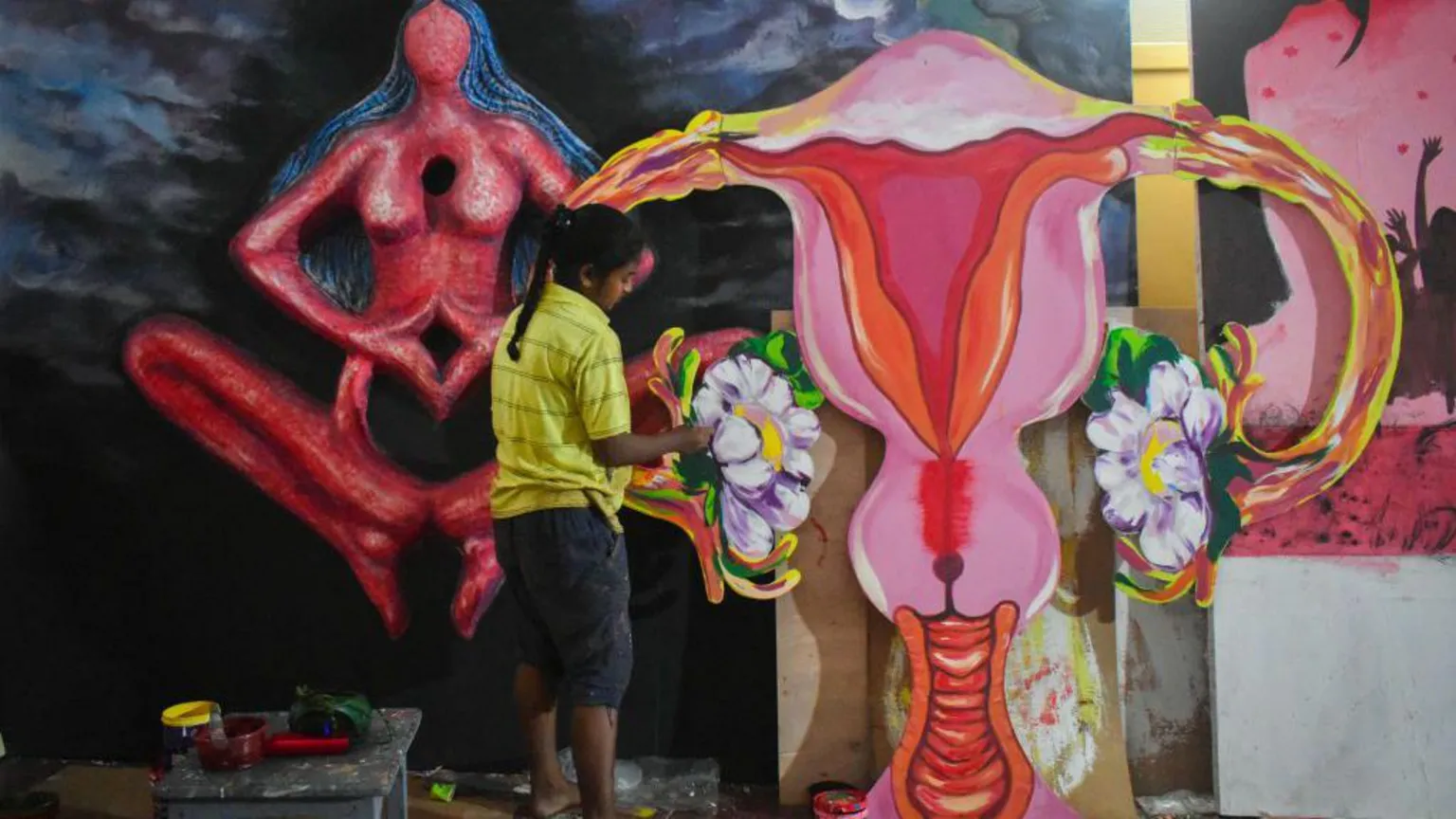
Karnataka Becomes First Indian State to Offer Paid Menstrual Leave to All Working Women
Written by: Annie Liang
Researched by: Jenny Zhao & Andy Huang
Edited by: Ellie Kim, Rui Zheng
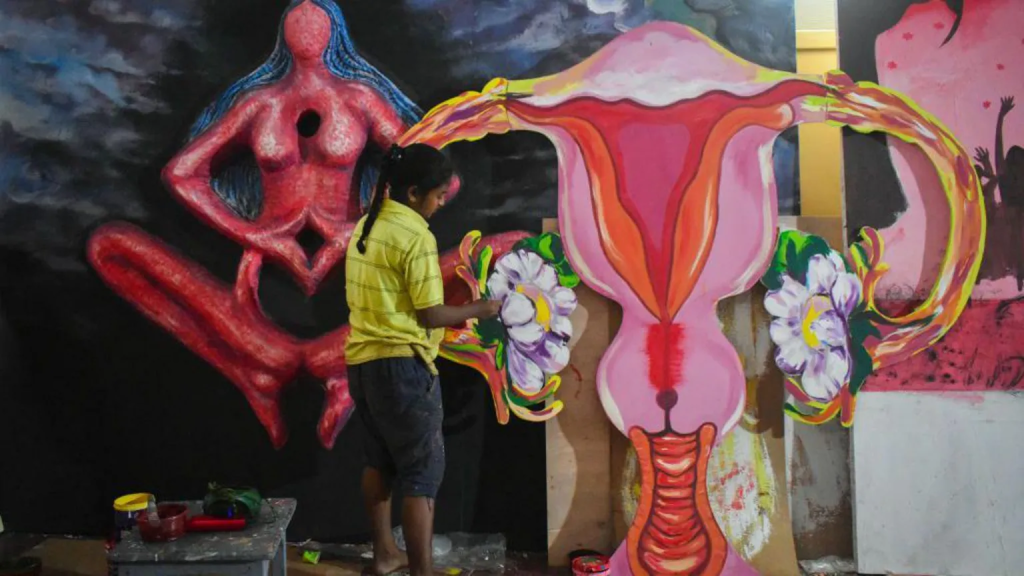
BENGALURU, India — Karnataka has become the first state in India to provide paid menstrual leave to women in both government and private sector jobs. Under the new policy, women from ages 18 to 52 in the formal workforce can take one day of paid menstrual leave each month without a medical certificate. The policy is expected to cover an estimated 350,000 to 400,000 women.
This is part of the Menstrual Leave Policy passed in October. Officials said the policy is intended to support women’s health and expand existing workplace welfare programs. The state formed an 18-member committee, led by Christ University law professor Sapna S., to study national and international menstrual leave models before recommending implementation.
The leave applies only to women in the formal sector, excluding an estimated 6 million workers in the informal economy such as domestic workers and gig workers. Experts have noted that this gap highlights ongoing disparities in workplace protections.
Menstrual leave policies exist in some countries including Spain, Japan, South Korea and Indonesia. Advocates say such policies may reduce stigma and improve employee well-being, while critics argue they can reinforce gender-based discrimination if not applied carefully.
Reactions in Karnataka have varied. Some workers welcomed the additional leave, while others expressed concern about the social stigma around discussing menstruation in the workplace. Karnataka’s policy is the first in India to extend menstrual leave to both government and private sector employees and may influence similar discussions in other states.
ENTERTAINMENT
T1 Wins the 2025 League of Legends World Championship
Written by: Keith Low
Researched by: Annie Ngo
Edited by: Annie Ngo, Kate Sum

CHENGDU, China — On Nov. 9, the League of Legends World Championship, a professional esports tournament hosted by Riot Games, was held in Chengdu, China at the Dong’an Lake Sports Park Multifunctional Gymnasium. With a peak concurrent viewership of 6.7 million viewers, viewers witnessed one of the most dominant gaming teams achieve what no other team has done in League of Legends history. Just three years ago, T1 won their first championship in over six years. Now in a 3-2 victory against fellow Korean team, KT, they just claimed their third championship win in a row.
While T1 swiftly took the first game, they lost momentum in the second and third games with KT proving to be a formidable opponent. For a while, it seemed that T1 would not be securing a three-peat championship run. But when all hope seemed lost, T1 turned the fourth game around and carried that energy into the final fifth game, emerging victorious from a decades long rivalry with KT dubbed “The Telecom War”.
Despite his overwhelming presence, even being crowned this year’s “Most Valuable Player,” T1’s “Attack Damage Carry” Lee “Gumayusi” Min-hyeong, announced he will be departing from the team. Lee initially joined T1 back in 2018 as a trainee and quickly worked their way up, becoming a part of the main roster just under a year later. Over the years, Lee has racked up numerous accomplishments for himself and for T1. Fans have speculated that Gumayusi may have decided to leave because of disputes with management. It seems that in exchange for T1’s record breaking three-peat, they will have to sadly depart Gumayusi, who undoubtedly played a critical role in this year’s championship final.
Asian Artists Shine in 2026 Grammy Nominations
Written by: Madison Hernandez
Researched by: Mandy Guan, Lauren Jim
Edited by: Lauren Jim

On Nov. 7, 2025, the Recording Academy announced the nominations for the 68th Annual Grammy Awards, set for 2026. Amongst them are notable Asian nominees, who show how Asians are no longer taking a back seat in popular culture. Rather, they’ve become a strong force of representation and visibility in the Western music industry.
“Golden,” an electropop track from the critically acclaimed Netflix animated film, “Kpop Demon Hunters,” earned five Grammy nominations, including two in major categories for Best Pop Duo/Group Performance and Song of the Year. Performed by fictional group HUNTR/X and voiced in real life by EJAE, Audrey Nuna and Rei Ami, “Golden” topped the Billboard Hot 100 for eight weeks and the Billboard Global 200 for 14 weeks. HUNTR/X is the first K-pop girl group to earn a Grammy nomination. Though the song is primarily in English, it features Korean words, highlighting the continuous Korean Wave and growing cultural significance of K-pop.
Rosé, an Australian-raised South Korean artist best known as a member of the girl group Blackpink, and Bruno Mars, an American singer-songwriter whose mother is of Filipina descent, joined forces on the hit song “APT.,” released Oct. 18, 2024. Inspired by a Korean drinking game, “APT.” was nominated for Song of the Year, Record of the Year, and Best Pop Duo/Group Performance. If “APT.” prevails, Rosé will be the first K-pop soloist to win a Grammy, Mars will add another Grammy to his extensive collection of 16 and Rogét Chahayed, a songwriter and producer on “APT.” with a West Asian background, will also earn an award for his contributions.
Katseye, a global girl group formed through a partnership between South Korea’s HYBE Entertainment and American record label Geffen Records, earned two nominations for Best New Artist and Best Pop Duo/Group Performance. Formed through the survival show “Dream Academy,” the sextet – composed of Sophia Laforteza, Yoonchae Jeong, Manon Bannerman, Lara Raj, Megan Skiendiel, and Daniela Avanzini – released their second EP “Beautiful Chaos” earlier this year featuring the hit songs “Gnarly” and “Gabriela.” Raj, one of the four members of Asian descent in Katseye, responded to the nomination saying, “In [all] seriousness, it feels so emotional because we’ve worked so hard and our team has worked so hard … We’ve put our genuine blood, sweat, and tears, like, all of that into this. It’s not everything, but it feels like everything.”
South Asian artists also shone in this year’s Grammy nominations. Anoushka Shankar, a British American musician of Indian descent, earned two nominations for her latest EP, “Chapter III: We Return to Light”, making her the Indian woman with the most Grammy nominations at 13. Additionally, Delhi-based composer and vocalist Siddhant Bhatia is nominated for Best Global Music Album with his album, “Sounds of Kumbha.” His album, inspired by the historic Mahakumbh festival in Prayagarj – one of the world’s largest religious gatherings – was commissioned by Uttar Pradesh, a state of northern India, as a cultural initiative. It incorporates field recordings, ancient mantras and contemporary compositions into 12 tracks with features from over 50 musicians from India and across the world.
 Asian Outlook | Art and Literary Magazine