POLITICS
Taiwan-China Engagement Continues Alongside Military Activity
Written by: Ianna Choi
Researched by: Ianna Choi, Kristen Li
Edited by: Ellie Kim
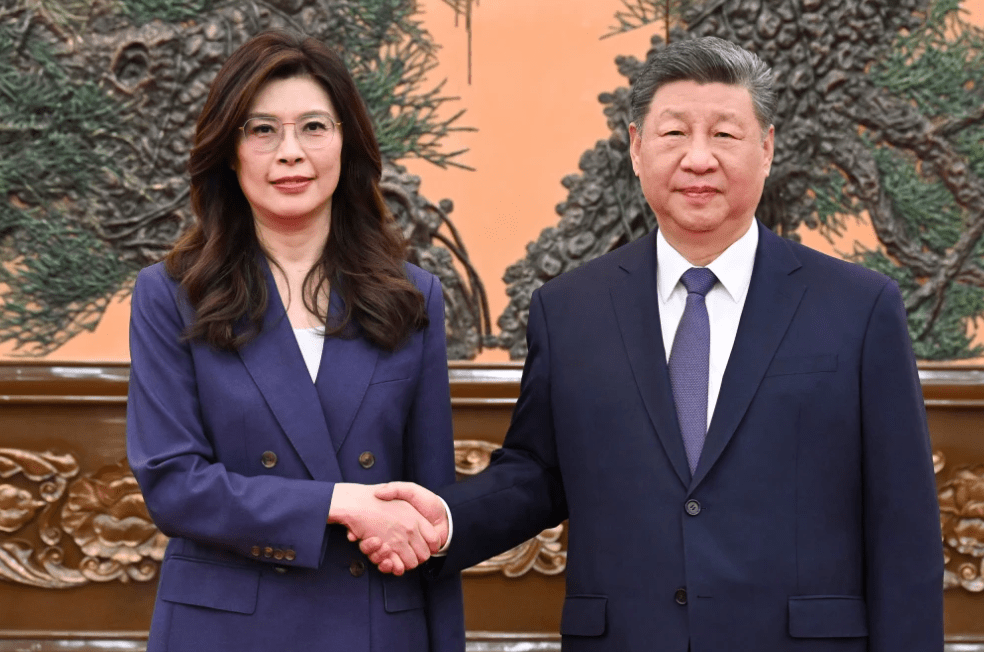
TAIPEI, Taiwan — Recent developments in Taiwan-China relations highlight continued political engagement alongside increased military activity across the region. A high-level visit by Taiwan’s opposition leadership to Beijing, combined with Chinese military drills and regional exercises, reflects ongoing shifts across the Taiwan Strait.
A key political development was the visit of Cheng Li-Wun, chair of Taiwan’s Kuomintang (KMT), to Beijing, where she met with Chinese President Xi Jinping. During the meeting, Xi emphasized long-term national goals, describing reunification as “historical inevitability.” Cheng, meanwhile, stressed stability and dialogue, stating that, “We must do everything in our power to prevent a war in the Taiwan Strait.” She also framed cross-strait relations as a choice between conflict and cooperation, emphasizing communication and mutual understanding as key to reducing tensions.
Cheng’s remarks align with broader KMT messaging that prioritizes engagement with Beijing. Beijing reiterated its position on sovereignty during the meeting. Xi stated that “Taiwan independence’ is the chief culprit destroying peace in the Taiwan Strait,” reflecting China’s continued opposition to independence movements. Cheng also framed cross-strait tensions as manageable through dialogue, suggesting that China’s use of force is directed at pro-independence actors rather than the broader population and emphasizing the role of “empathy and communication” in reducing misunderstandings. She also pointed to periods of relative stability under previous administrations as evidence that peaceful relations remain achievable.
At the same time, military activity in the region has intensified. According to the South China Morning Post, China conducted naval exercises east of Luzon, describing them as “a necessary action taken in response to the current regional situation.” The drills included live-fire exercises and air-sea coordination to test joint combat capabilities. These developments coincided with Balikatan 2026, a large-scale joint exercise involving the United States, the Philippines and Japan, reflecting increased regional military coordination.
Additional reporting notes that Taiwan has also conducted coast guard exercises on Itu Aba in the South China Sea, while China deployed an amphibious warship and sailed an aircraft carrier nearby. Overall, the situation continues to evolve as both diplomatic engagement and military activity unfold in parallel.
Rising Tensions in the Strait of Hormuz and Their Global Impact
Written by: Mandy Guan
Researched by: Mandy Guan
Edited by: Ava Gabriel, Lauren Jim

The opening and closing of the Strait of Hormuz has created a global crisis, connecting the naval blockades in the Middle East to economic tensions around the world. Much of the current standing stems from the failure to reach an agreement during peace talks between the United States and Iran, held in Pakistan during the week of April 7, 2026. On Friday, April 17, the Strait of Hormuz was briefly declared open by the United States and Iran following the announcement of a 10 day ceasefire between Israel and Hezbollah. Less than 24 hours later, Iran reinstated a crackdown on vessels entering the waterway, as the United States had not ended its blockade of Iranian vessels southeast of the Strait of Hormuz in the Gulf of Oman. As a result of the failed negotiations, Iranian authorities are now forcing neutral vessels to abandon standard shipping routes and instead follow a route that runs closely along the Iranian coast.
The economic instability has prompted Japan to make a strategic pivot. On April 15, 2026, Prime Minister Sanae Takaichi announced an initiative to provide roughly $10 billion in aid to Southeast Asian countries facing rising oil prices stemming from the war in the Middle East. The aid is designed to help less wealthy nations in the region purchase oil from the United States and other suppliers. Takaichi emphasized that the plan goes beyond short term relief, stating that Japan aims to “build a strong resilient energy and critical mineral supply chain” in partnership with the region. This is particularly important as Southeast Asia is a major manufacturer for key goods derived from petroleum, meaning disruptions could ripple into global shortages of everyday products.
Despite these efforts, diplomatic progress still remains uncertain. In a recent development on April 23, 2026, Donald Trump announced that Israel and Lebanon agreed to extend their ceasefire with Hezbollah by three weeks following talks in the White House that occurred that day. While the extension suggests a willingness to maintain short-term stability, it does little to address broader tensions involving the United States and Iran. Uncertainty surrounding the Strait of Hormuz and global energy markets is likely to persist.
Oil prices remain highly volatile, with crude oil exceeding $100 per barrel as ongoing conflict and instability in the Strait of Hormuz ripple through the global economy.
FEATURES
New AI Advancements in China vs. US and its Implications
Written by: Andy Huang
Researched by: Andy Huang
Edited by: Ellie Kim
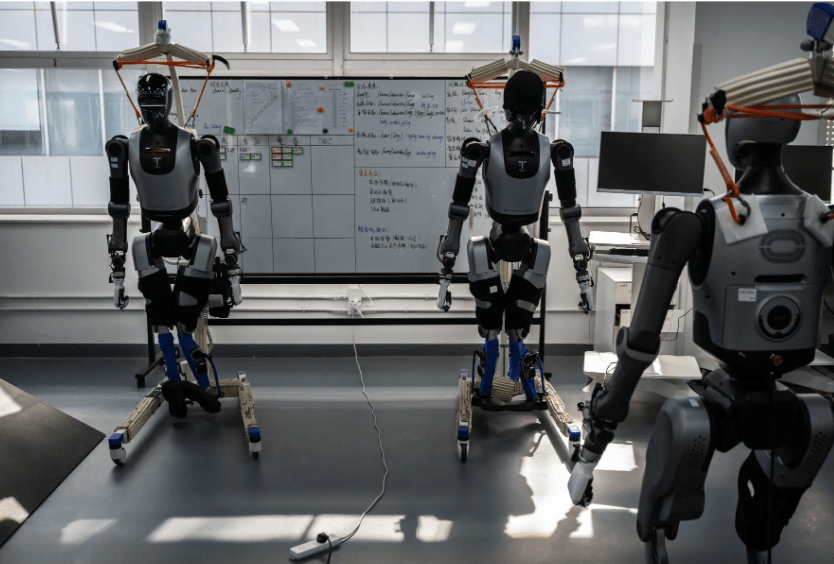
China has now outcompeted the United States in terms of Artificial Intelligence. According to the Stanford University Institute for Human-Centered Artificial Intelligence (HAI) 2026 AI Index report, there is a shrinking gap in relative performances between artificial intelligence models developed in the United States compared to China. “In May 2023, the U.S.’s top model, OpenAI’s GPT-4, led with more than 1,300 Arena points compared with China’s fewer than 1,000. By March 2026, that gulf shrank to just 39 Arena points, with the top U.S. model, Anthropic’s Claude Opus 4.6, leading China’s Dola-Seed 2.0 by just 2.7%” says Sasha Rogelberg, a reporter and former editorial fellow on the news desk at Fortune. Arena points is a metric used to determine the relative performances of large language models and the trend seen between models developed in the United States versus China shows a receding gap. However, this trend is not a surprise as China’s emergence in the AI global sphere has been gradually gaining traction over the years. Convincingly, this year in particular, China seems to have surpassed the lead that the United States once held in Artificial Intelligence development.
Over the years, China has poured billions into funding AI startups and has quietly invested in its electricity infrastructure. In particular, Chinese AI labs are focused on improving their models’ efficiency, reducing the costs of deployment, and increasing models’ performance from limited compute resources. Furthermore, to keep up with competition from overseas developers, Chinese AI start ups have had to resort to algorithmic and engineering solutions to compensate for their limitations. In contrast, the American power grid system has fallen short of the electrical demands created by AI as a result of decades of underinvestment. Mohit Kumar is Jefferies global macro strategist and said that “We believe that China is the big winner in this tech war for a number of reasons: valuation, wider adoption of AI, an advantage in power generation.”
The Stanford report noted that the United States funded 1,952 new AI companies last year, which is 10 times more than any other country in the world. In addition, the United States reached $285.9 billion in spending compared to China’s $12.4 billion investment into AI in 2025. In comparison, the United States has plateaued in recent AI developments despite increased funds, so the amount of spending and results do not equate each other. Moreover, the shift in this may be due to the fact that there’s been a decrease in tech talent that have been entering the United States. The Stanford report found the number of AI scholars moving to the United States dropped 89 percent since 2017, and that decline is happening precipitously, accelerating down to 80 percent in the past year alone.
So, what does this mean for the United States? Economists have warned that a continual loss of expertise will continue to erode the edge that the United States had over China in terms of its roster talent. According to the 2025 Hoover Institution report conducted in partnership with Stanford HAI, China has built a massive cohort of homegrown talent. Nearly all researchers behind DeepSeek’s five foundational papers were educated or trained in China. This pattern represents the fundamental challenge to the United States’ technological leadership that export controls and computing investments alone cannot address. Ultimately, the winner of the AI race will be determined not simply by who builds the most powerful models, but by who can most effectively translate AI into broad-based economic and societal gains. Whether or not the United States will be able to compete with China’s development in Artificial Intelligence remains uncertain, as current trends and data need further expansion and review.
ENTERTAINMENT
Recent Departures Within the K-Pop Industry
Written by: Anderson Li
Researched by: Anderson Li, Jacky Jiang
Edited by: Annie Ngo

Within the span of just a few months, many prominent names within the K-Pop industry have made headlines with their departures from their groups. Four names in particular dominated these headlines: NCT members Mark Lee and Ten concluding their contracts with SM Entertainment, Heeseung departing from ENHYPEN and Manon quietly stepping back from KATSEYE on a hiatus.
One of the most major announcements came from SM Entertainment’s Mark Lee. As a member of NCT since their debut, his decision to leave both the boy bands NCT 127 and NCT Dream came as a huge shock. With his contract with SM Entertainment ending on April 8th, Mark’s activities come to an end 10 years after his debut. In his personal statement, Mark says “what my heart sees right now isn’t a closing door but rather an opening new one.”
Mark’s departure has not been the only news to come from SM Entertainment in the past month. Similarly to Mark, Chittaphon Leechaiyapornkul, known professionally as Ten, of NCT U and WayV has decided to conclude his contract with SM Entertainment after it expires on April 8th. However, unlike Mark, Ten has decided to continue to partake in group activities whenever it is possible.
Another big name departure in recent months was from Lee Hee-seung (known as Heeseung) of ENHYPEN. This news came as a big surprise to fans as the departure was abrupt and the group has been very successful. While Heeseung has left ENHYPEN, he has notably stayed with Belift Lab, the group’s agency. In their statement, Belift Lab states that “it became clear that Heeseung has his own distinct musical vision and we have decided to respect it,” hinting at a solo debut.
Heeseung is not the only idol under HYBE music label who has made headlines in recent months. Manon Bannerman of KATSEYE has also been a hot topic, with many fans speculating about her potential departure. While KATSEYE is not considered a K-Pop group, they are a global girl group that is influenced by K-Pop culture and managed by a South Korean conglomerate. The group has made an official statement stating that Manon would be taking a “temporary hiatus from group activities to focus on her health and wellbeing.” Recently, KATSEYE performed at Coachella 2026 without Manon, and she was not a part of their newest release Pinky Up.
While departures are nothing new in K-pop, this number of departures in the span of a few weeks is very notable. Whether these artists pursue their own solo ventures, a new label, or something else unexpected, 2026 is shaping up to be a pivotal year for the industry.
Twitch Streamer Sykkuno Faces Cheating, Messaging Allegations
Written by: Andrea Hsu and Donovan Lai
Researched by: Andrea Hsu and Donovan Lai
Edited by: Ellie Kim

The gaming industry during the COVID-19 era was one of the few that thrived. “Among Us” was incredibly popular, allowing people to socialize and connect online during a period of isolation. From videos of various streamers meeting each other through the game to the creation of a joint content house later after the virus, it was clear to everyone that fame had hit the gaming circle. During this era, came the rise of various Twitch streamers, one of whom was Sykkuno.
Sykkuno is a name that has spread across social media due to his lengthy apology and all the recreations of his “cringe” moments. But, who is Sykkuno? His real name is Thomas, and he is a 34 year-old man who built his brand on Twitch as a wholesome and adoring person. He was someone who was seemingly very shy as he would cover his mouth whenever he laughed.
He frequently mentioned his low confidence, saying he never had friends, despite “glazing” from his support group. He said that people would always “flame” him, so he learned to think that every compliment he received was just “for the memes.” This act of self-pity garnered attention from supporters all over the world. Many commented on his kindness toward women and his awkward personality, which made him even more well-liked.
He complained about his lack of female attention, saying no girl has ever liked him and that every girl who messaged him was also just “memeing.” He advertised himself as a single man who could not attract anyone. Whenever he was given a compliment, he started acting flustered and even adopted the “soft boy” persona to attract more female attention.
He also called himself poor, using his actions to garner sympathy. He would offer justifications, such as needing to microwave his coffee, only eating frozen burritos, and needing to pay off his water bill to extort money from his viewers. This came as a shock to them, who pitied him. Over time, these excuses became less and less believable, as he now has nearly 4 million followers and 109 million views on Twitch.
Earlier this month, Sykkuno was exposed for messaging young female VTubers (virtual YouTubers) who were new to the industry. His large and aggressive fanbase contributed to a power imbalance that made it difficult for smaller creators to push back, which he reinforced by maintaining a “nice guy” persona while engaging in manipulative behavior. One person came forth with a 40+ page document, riddled with screenshots of Sykkuno’s messages towards her, both when she was a minor and when she was an 18-year-old. In these messages, he maintained his on-camera personality in the beginning. But as they got to know each other better, and as the conversations became more romantic and erotic, the author asked him if he was talking to other girls; he denied it. However, he actually has had a long-term girlfriend since 2021. As the news erupted, the countless memes and clips flooded and resurfaced on all the different platforms. Many old time viewers were struck with nostalgia over the name of such a classic COVID-19 streamer. Then, the shock spread as the realization of his lies all came crashing down on them.
On Apr. 16, Sykkuno released a joint statement with his girlfriend. In the letter, they acknowledged the serial cheating of Sykkuno along with their future plans to stay and fight together through these tough times.
 Asian Outlook | Art and Literary Magazine